STEEL PLANT EXPANSION JOINTS


EXCELLENCE IN
BEST-IN-CLASS

STEEL PLANT
EXPANSION JOINTS

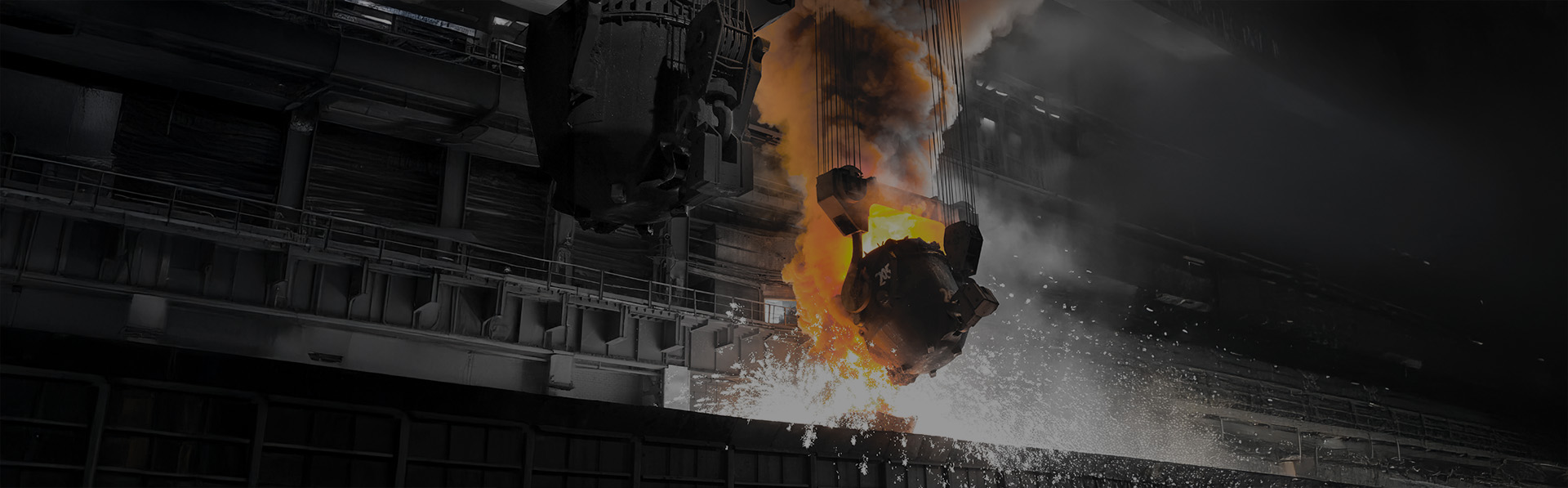
Expansion Joints are used in a wide range of applications within steel plants. Steel plants are large and complex plants with many pipelines, some of which are of large diameter. The piping is often placed high above ground level, which places high demands on the components used and installed as well as their design and functions. In these pipelines a large quantity of Expansion Joints is needed to absorb thermal movement.

Applications:

  • Exhaust gas ducts
  • Water lines/water pipelines
  • Chemical processing plants
  • Pipes around, and to and from,
    the blast furnaces
  • Pipelines for gas cleaning
  • Air pipes
  • Coke gas plants
  • and many more applications

Design expertise:

  • High temperatures
  • Large dimensions
  • Special designs
  • Special material requirements
  • Special insulation requirements
  • Refurbishment

Design range and scope of supply within Steel Plant Expansion Joints

The capability design range for Belman and Steel Plant Expansion Joints are:

Dimensions

DIMENSIONS:
DN 50 to DN 4000
(Belman range:
DN 25 – 12,000.)

Pressure

PRESSURE:
1 barg to 40 barg
(Belman range:
From full vacuum up to
150 barg or more if required.)

Temperature

TEMPERATURE:
Up to 900°C
(Belman range:
from -269°C to +1000°C.)

Materials_bellow_Symbol

MATERIALS:

All austenitic stainless steels including 1.4541 (AISI 321), 1.4571 (AISI 316Ti), 253MA, 1.4828 (AISI 309), Hastelloy, Inconel 625, P355NH (excluding the bellows), P265GH (excluding the bellows)

Design_Codes_Symbol

DESIGN CODES:

EN 13445, EN 13480, EN 14917
ASME VIII, div.I, ASME B31.3
ASME B31.1, EJMA, AD 2000
and others on request

Test and Quality Control

TESTS:

Radiographic examination (X-ray), Helium leak testing, Pressure test, Air test, Dye penetrant test, Magnetic particle examination and many more

ENGINEERED

STEEL PLANT EXPANSION JOINTS

INNER SLEEVES IN 1.4828 (AISI 309) DUE TO HIGH TEMPERATURE

CASE STORY

For a blast furnace in Germany, Belman engineered and manufactured four 1:1 replacement Expansion Joints identical to the previous solution. This provided the client with a proven, reliable solution while avoiding the need for additional testing and third party approvals. The medium in the pipeline of the installation operates at a temperature of approximately 900°C, requiring both the pipeline and the Expansion Joints to be refractory lined to ensure a much lower skin temperature. This allows the Expansion Joints to be designed for a temperature of just 120°C, using materials such as 1.4571 and 1.0425 respectively.

EXPANSION JOINTS FOR A THREE-DIMENSIONAL SYSTEM

CASE STORY

One Hinged Expansion Joint and two Gimbal Expansion Joints for a three-dimensional system in the cold blast piping at a blast furnace in a German steel plant. This three-dimensional system is a viable solution that is often used when there is a pipe going in a vertical direction that changes into a horizontal direction. The three-dimensional system absorbs movement from the horizontal pipe in any direction through the use of the gimbals, while the Hinged Expansion Joint takes the vertical movement resulting from the reduction of the vertical distance between the gimbals.

EXPERIENCED & APPROVED SUPPLIER

REFERENCES

Thyssenkrupp • Severstal • TATA • ArcelorMittal • Isdemir • SSAB • NLMK Group • Nornickel • Ruukki • AET Technologies • ISD Dunaferr • Gerdau • Salzgitter • TRIMET • Voestalpine Group • Steel dynamics • Usiminas • Třinecké železárny •

Hüttenwerke Krupp Mannesmann (HKM) • Al Ezz Dekheila Steel Co. • Euronickel Industries (FENI industries) • EZDK (Ezz Steel) • Evraz • Paul Wurth • Siemens VAI • Corus • Aurubis • SMS Group • Kalugin • Outokumpu • SSI (CORUS) • Saudi Iron & Steel Company • JSW Steel

STEEL PLANT EXPANSION JOINTS

TECHNICAL DESCRIPTION

TYPES & DESIGN

The Expansion Joint types and designs applied in steel plants cover both standard catalogue Expansion Joints as well as customised Expansion Joints designed for the exact application. However, the main types of Expansion Joints which, in Belman’s experience, are used in steel plants are:


Customised Steel Plant Expansion Joint solutions
As Expansion Joints are used in various applications in steel plants and for many different medium compositions as well as a wide range of operating data, the design and features of the Expansion Joints can vary greatly from project to project. For some projects austenitic stainless steel is preferred, whereas for other projects heat resistant steels or wear-resistant steels are needed. Belman is highly specialised in finding and designing the best custom solution for the client and the application in question.

MATERIALS

Expansion Joints for steel plant applications are made from many different steel and metal types. Stainless steels, heat resistant steels or wear-resistant steels are generally used for both the bellow(s), inner sleeve, flanges, middle pipe and welding ends. Belman can design and manufacture Expansion Joints for steel plants from:

  • All austenitic stainless steels (i.e. 1.4541, 1.4571 etc.)
  • 1.4828 (AISI 309)
  • Hastelloy
  • Inconel 625
  • 253MA
  • P355NH (excluding the Bellows)
  • P265GH (excluding the Bellows)

ADVANTAGES

  • The correct Expansion Joint solution for the application
  • Customised in all kinds of materials, even heat resistant alloys
  • Customised for the application no matter the dimension
  • Cost-efficient solution for the applications

PRODUCT
BROCHURE

Belman - Catalogue

GET THE
CATALOGUE

QUALITY & TESTS

Belman is known for high quality products and therefore our quality control is a fundamental part of our business. All processes during production designed by the Belman quality engineers, is strictly follow and implement according our procedures and instructions and carefully inspected by Belman quality inspectors. All checks and inspections are done according to the strict prevailing Belman quality control procedures which is part of the Belman ISO 9001 quality management system approved by DNV.


ITP & Test
Inspection test Plan generated by the quality management system makes sure that each step of manufacturing has the appropriate inspection points such as Hold and Witness points.

Based on manufacturing code, project specification, application, media, and eventual ship classification rules Belman performs a large variety of quality tests including destructive, non-destructive testing and proof testing. All tests can be witnessed by the 3rd part based on the customer and classification requirements.

  • Destructive test: such as life cycle test and burst test to validate the design, i.e., vessels and offshore platforms
  • Non-destructive test such as Visual testing, dye penetrant test, Radiography examination, Magnetic testing, ultrasonic testing, hardness testing and PMI for all applications
  • Proof tests: leak test with air, leak test with helium and formier gas, hydrostatic pressure test for all application
BELMAN EXCELLENCE IN

REFURBISHMENT
OF EXPANSION JOINTS

Instead of buying completely new Expansion Joints, options for refurbishment of Expansion Joints are worth considering. From a time, cost and environmental perspective refurbishment often represents an attractive solution. Over the years Belman has carried out many refurbishment projects. On the basis of this experience Belman often promotes refurbishment as a good solution if the Expansion Joint contains heavy steel constructions in carbon steel or stainless steel. The parts that are re-used are often sand blasted and coated, and then appear as new. These re-used parts are then welded together with the new parts. New parts/replaced parts are: Bellow(s), inner sleeve(s), whereas Re-used parts are: Welding ends and flanges, gimbals and hinges and other hardware

Supporting steel plants to increasingly shift toward greener practices
Steel plants around the world are increasingly moving towards greener, more sustainable operations in response to growing environmental concerns and regulatory pressures. This includes the production of low-carbon “green steel” using cleaner energy and innovative processes and the shift from traditional steel production methods to the manufacture of green steel – steel produced with significantly reduced carbon emissions. At the same time, many steel producers are rethinking their approach to equipment maintenance and component lifecycle management. Rather than full replacement of worn or damaged components, there is a growing emphasis on repair, refurbishment, and reuse. This extends equipment life; cuts waste and lowers the carbon footprint – supporting the industry’s transition. This is why refurbishment of Expansion Joints is a highly attractive solution for the client.

BELMAN EXCELLENCE IN

CLAMSHELL BELLOWS
FOR EASY ON-SITE REPAIR

Clamshell Bellows are two-piece Expansion Joints that are split in two halves longitudinally and then fitted into position and welded together on-site. Clamshell Bellows provide a very effective solution when a quick and unplanned replacement of the Bellows is needed. They can be retrofitted when the existing Bellows lose their ability to contain pressure. The purpose of Clamshell Bellows is to provide a very quick remedial solution with the least disruption to pipe system operations. The use of Clamshell Bellows invariably yields huge cost savings when compared with the cost of manufacturing and fitting a completely new Expansion Joint. They can be designed as oversized or same-sized and as both a temporary or permanent solution. Belman designs and manufactures this type of bellows up to DN 12.000 in size, utilising all kinds of materials and in both round and rectangular shapes.

WE HAVE ENGINEERED

EXPANSION JOINTS SINCE 1994

This enables us to find you the optimum solution to your piping system.

Top