belman@belman.com

ROHR2 SPECIFIED
EXPANSION JOINTS
 District heating
 Denmark
 EN 14917
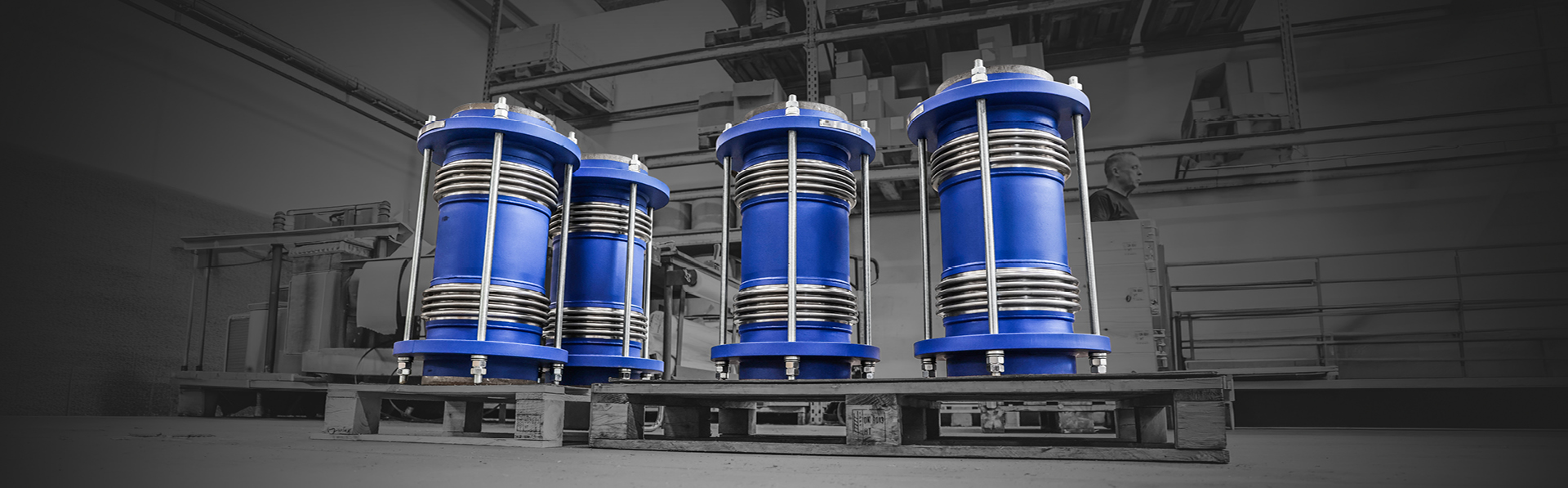
For a district heating piping system in Denmark, Belman supplied four Tied Expansion Joints to be installed in the system on the pressure side of the four pumps. The Tied Expansion Joint design was originally selected from the manufacturer’s list available in the ROHR2 piping design software, which includes Belman’s Expansion Joint data. Following successful operation of the first delivery one year earlier, the client returned to reorder the same proven Expansion Joint design for a new section of their pipeline, demonstrating continued confidence in Belman’s engineered Expansion Joint solutions.
CLIENT ISSUE
For their district heating network, the client required Expansion Joints that could accommodate lateral movements. The network is part of a 150 km+ transmission system in Denmark, supplying four municipalities with reliable and sustainable heating. The client operates and maintains pipelines, pumps and heat exchangers while integrating green and surplus heat sources such as waste-to-energy and industrial excess heat. This ensures stable operation and cost efficiency while supporting the region’s energy transition and sustainability goals.
The client is currently renovating pumping and heat exchanger stations along its main district heating transmission line. The existing equipment has been in operation for around 40 years and is being replaced to improve efficiency and reduce energy consumption. The upgrades are being carried out in phases, in line with the increasing demand and growing number of consumers. For the first phase, an engineering company supported the client on the design of an updated piping layout using ROHR2, where Belman Expansion Joints were selected from the manufacturer’s list. Following the great work from the piping designer, it was easy for the client to turn to Belman for a quote on a custom build based on the Belman Expansion Joint data extracted from ROHR2. The client initially ordered four Tied Expansion Joints. With the design now proven in operation, the client has returned to Belman for a same-design Expansion Joint solution for the next section of the transmission line.
BELMAN SOLUTION
ROHR2-selected Expansion Joints
Based on the ROHR2 report including specifications, drawings, static calculations, 3D models and isometry drawings, Belman designed and manufactured the same-design Expansion Joints. The Lateral Expansion Joint design was selected by the client to accommodate the lateral loads and relieve the pumps, preventing them from being exposed to these forces. The DN 250 Expansion Joints are designed with tie rods to control the absorption of the lateral movement. As the design incorporates two Bellows and a middle pipe, it can absorb a relatively large amount of lateral movement – in this case +/-15 mm. This makes the built-in length 700 mm. The district heating media sets no extreme requirements for the materials used, and therefore the Bellows are made from 1.4541, which has excellent performance characteristics. In fact, this type of steel is used as standard Bellow material for all Belman Expansion Joints found in ROHR2 due to its versatility, favourable pricing and availability. The welding ends and middle pipe are made from 1.0345 while the flanges are made from 1.0425. All carbon steel parts are primed. The Expansion Joints are made according to PED module H, CE-marked and have full traceability.
Expansion Joint selection from the manufacturer’s list in the ROHR2 Software
The Expansion Joint design was selected from the manufacturer library in ROHR2, where an engineering company supported the client in developing the piping layout and integrating Belman Expansion Joints into the system. The client analysed the selected design as part of its piping stress analysis project and subsequently chose Belman’s solution for the installation. As the design temperature was 250°C at 25 barg, the engineering company expertly selected Expansion Joints for 40 barg, as all Belman Expansion Joint data in ROHR2 are given at 20°C. Following the completed piping design, the client submitted the extracted specifications to Belman for adjustment to actual design conditions and optimisation of load reduction on the pumps. Belman refined the design and returned updated parameters to the client for implementation in the ROHR2 model. After successful operation of the first part of the line, and with the Expansion Joint solution selected, the client proceeded with a 1:1 reorder for another section of the system.
Belman Expansion Joints in ROHR2
ROHR2 is the leading European software for pipe stress analysis, widely used for static and structural design, analysis and evaluation of piping systems, including by everyone involved with Expansion Joints. Naturally, Belman Expansion Joints are available in the ROHR2 manufacturer’s database, enabling engineers to easily select and integrate them into piping system designs. On the manufacturer’s list, Belman has included a wide range of 3500+ Expansion Joint configurations, each of which can be selected and adjusted to ensure the optimal performance and service life of the pipe system. This means that through the ROHR2 component database, under ‘Expansion Joints’, engineers can find, select and incorporate Belman Expansion Joints directly into their projects. This simple process eases the workload for everyone involved in Expansion Joints and means that the Expansion Joint is thought into the overall system design, ensuring that thermal expansion, pressure loads and piping movements are properly analysed and evaluated. Using Belman Expansion Joints in ROHR2 projects allows engineers to optimise the piping layouts, verify system integrity and ensure that the selected Expansion Joint solution(s) are compliant with the operating conditions. This integration supports efficient engineering workflows and delivers reliable and well-documented Expansion Joint solutions within the client’s piping system. By sharing ROHR2 data such as calculations and specifications, Belman can further support the client with the customisation, optimisation and supply of tailored Expansion Joint solutions.
Why is ROHR2 a good starting point for selecting Expansion Joint solutions?
The key point of the manufacturer’s list in ROHR2 is that it simplifies component selection, supplier requirements and integration into the piping design. It provides engineers with a structured and efficient starting point for selecting and specifying the correct Expansion Joint.
The process:
- Initial piping design is made:
The client develops the base piping layout in ROHR2 and selects a suitable Expansion Joint type and length from the manufacturer’s database (list). - Customisation at Belman:
Since all Belman Expansion Joints are uploaded in different barg groups, all at 20°C, project-specific adjustments are often required. The client can extract and share calculations and specifications with Belman for further modifications. - Optimum solution provided by Belman:
Belman analyses and optimises the Expansion Joint design according to the actual operating conditions and system requirements. - New data for ROHR2 verification submitted
Once the solution is accepted by the client, Belman forwards the new input data, which is implemented in its ROHR2 model for further analysis and evaluation of the Expansion Joint solution in the client’s piping design. - Final validation
Based on the new input data, the client verifies the complete piping system, including Expansion Joint performance and movement behaviour, ensuring compliance and avoiding risks such as overstressing or collisions. The final design is then ready for procurement.
Belman – expertise on Expansion Joints for district heating
Since 1994, Belman has supplied engineered Expansion Joint solutions for district heating systems worldwide. With decades of experience, Belman supports operators, contractors and engineering companies with reliable Expansion Joint solutions designed to accommodate the thermal expansion and movement in their district heating pipelines. Belman designs and manufactures customised solutions for both above-ground and underground piping systems, ensuring that thermal movements are absorbed safely without transferring excessive forces to the surrounding pipework and equipment. By combining proven design principles with advanced engineering and manufacturing expertise, Belman delivers robust, efficient and long-lasting Expansion Joint solutions that help ensure safe and reliable operation of district heating networks.