
 belman@belman.com

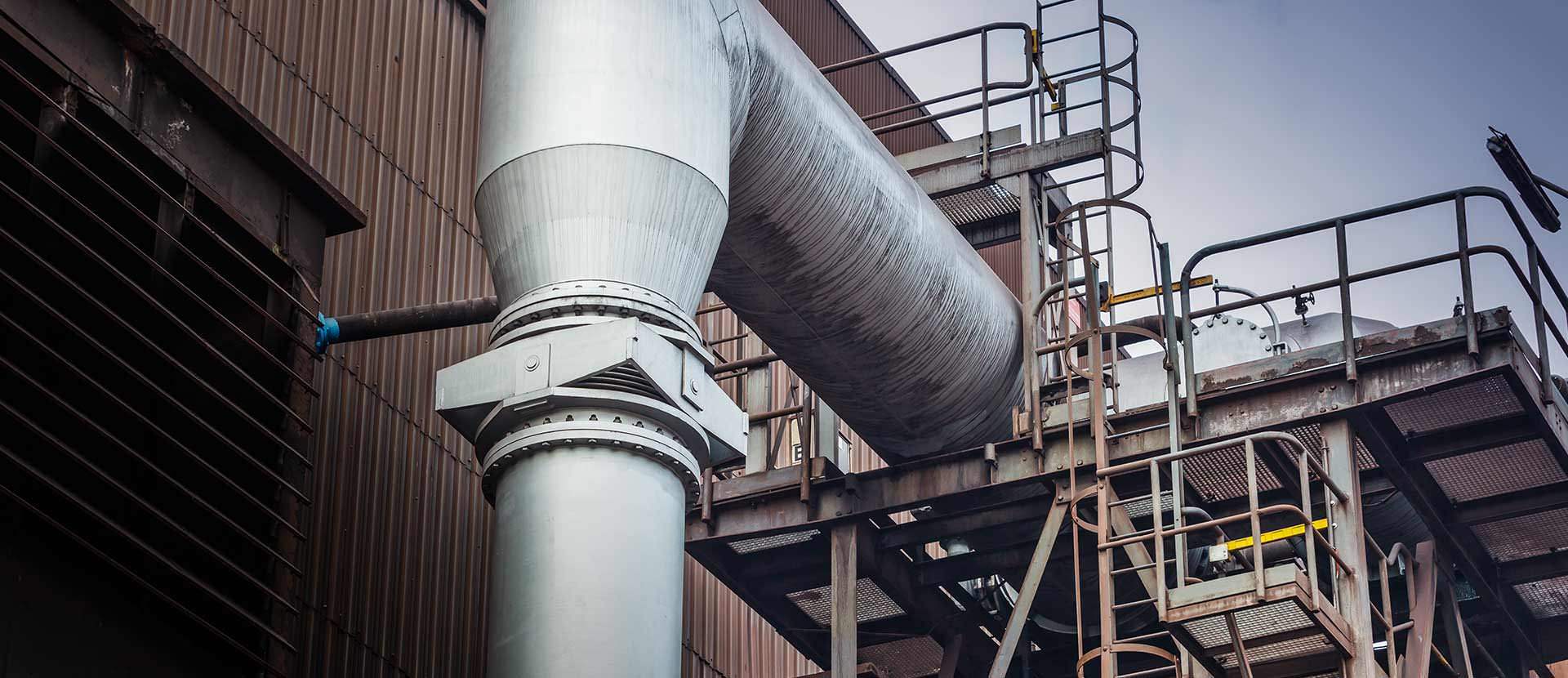
EXPANSION BELLOWS
FOR PIPING
Since 1994 Belman has expertly designed and manufactured Expansion Bellows for piping for clients worldwide. Hence Belman is the go-to company for Expansion Joints designed to match the client and the plant specifications and the need for accommodation of pipeline movements as well as ensuring smooth operation and solutions to overcome operational challenges for clients around the world. With decades of experience, Belman is a trusted name in engineered Expansion Bellows. We customize Expansion Joint solutions for various applications and project needs worldwide, ensuring quality and reliability every step of the way. Along with high end solutions of premium quality, the client is ensured the optimum solution supported by full documentation. Belman us furthermore an active member of EJMA (Expansion Joint Manufacturer Association).
Useful information on the design, placement and selection of Expansion Bellows for piping
As an Expansion Bellow is an essential and critical component in the piping system the following will explain the fundamentals as well as link to further information.
product range
Belman provides a complete range of customized Expansion Bellows for piping, including Metallic Expansion Bellows, Rubber Expansion Bellows, Fabric Expansion Bellows as well as Metallic Flexible Hoses and complementary services such as Refurbishment, on-site services and Piping Design.
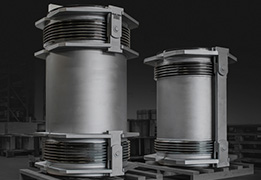
METALLIC
EXPANSION BELLOWS
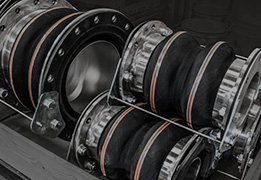
RUBBER
EXPANSION BELLOWS
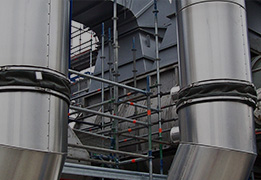
FABRIC
EXPANSION BELLOWS
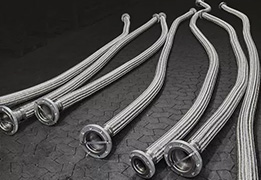
METALLIC
FLEXIBLE HOSES

Refurbishment of
COMPENSATORs

ON-SITE
SERVICES
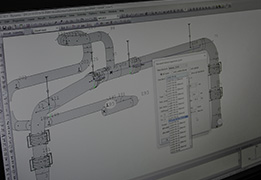
PIPING
DESIGN

FAST-TRACK
SERVICE
Customized expansion BELLOWs for pipING
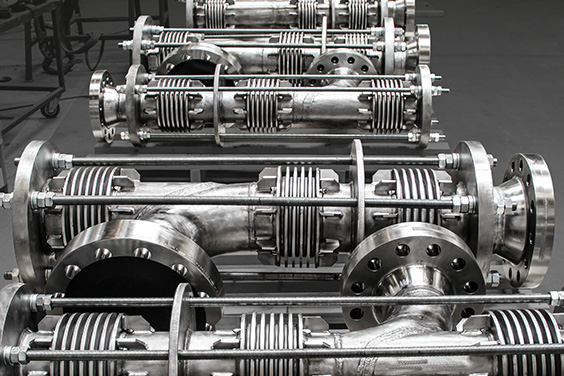
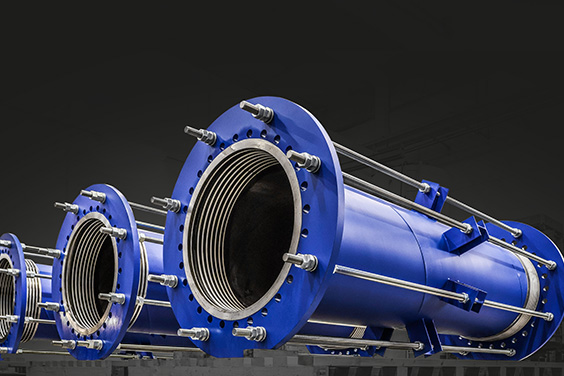
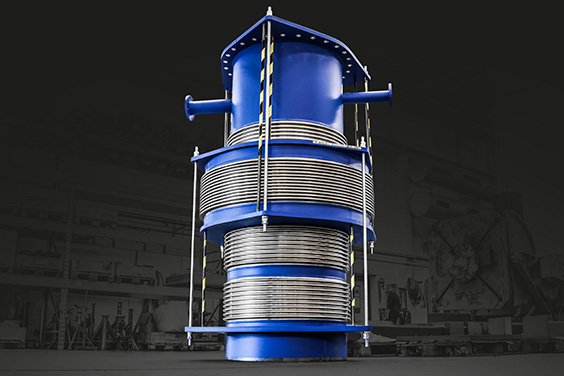
All Expansion Bellows for piping from Belman are engineered specifically to suit the client’s project and to solve the expansion problem in question. The Flexible Solutions are developed in accordance with the submitted specifications and in close interaction with our clients, producing results which offer the optimal balance between performance and cost. Belman possesses extensive years of experience in engineering, production and testing of Expansion Bellows for piping for trouble-free operation and safety. Over the years we have supplied +900.000 Pipe Expansion Joints, which means that no matter the solution needed Belman can engineer it.
TECHNICAL DESCRIPTION
APPLICATIONS OF
EXPANSION BELLOWS FOR PIPING
Pipe Expansion Joints are important components in many industries and are used extensively in pipework in the following industries:
- Energy sector
(power plants, nuclear power plants , district heating pipe systems ) - Chemical industry
(asphalt production, fertilizers, etc.) - Steel plants
- Cement
- LNG/LPG
- Petrochemical industry
(Oil refineries, pumping stations,
oil platforms, tank farms ,
Liquid Catalytic Cracking (FCCU )
- Power-to-X
( hydrogen, ammonia, etc. ) - Engines and exhaust
( Exhaust systems , exhaust gas cleaning systems (scrubbers) ) - Process industry
- Pulp & paper
- Research institutes & space rockets
- Mining
(Trailing systems, at pumps, etc.)
as well as in their related processing plants
(acid plants, foundries, etc.)
Our Pipe Expansion Joints are often installed near boilers, heat exchangers, pumps, turbines, condensers, motors and in long pipework systems or pipelines.
BASICS & BENEFITS
Basics on Expansion Bellows for piping
Expansion Bellows for piping are designed to safely absorb the dimensional changes of the pipe systems and ducts. The changes could be heat-induced expansion and contraction, vibrations caused by rotating machinery, pressure deformations, misalignment during installation or building settlement.
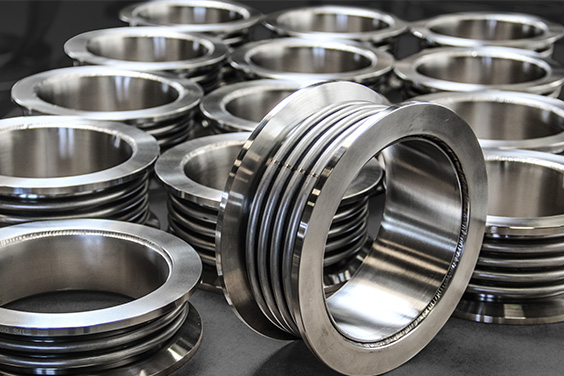
The main element of the Expansion Joint is the Bellow. The Bellows are made up of a series of convolutions, with the shape of the convolution designed to withstand the internal pressure of the system, but flexible enough to accept axial, lateral and angular movements.
Benefits of using Expansion Bellows for piping
To accommodate movements in piping systems, the pipe designer can choose between installing Expansion Joints and other flexible solutions such as pipe loops (Lyra bends).
Engineers and pipe designers routinely incorporate Expansion Bellows for piping into their pipework systems, due to the improved flexibility in design and cost reduction due to the removal of the complexity of fix points and guides. Further, the overall space requirements for the piping system are reduced.
Expansion Joints also offer the advantage of reducing stresses in pipe systems generated by thermal expansion, and reduce pipe loads at connections to sensitive equipment such as pumps and steam turbines. Together, this acts to prolong the service life of pipework systems, and reduces the risk of their downtime for additional maintenance and repair.
In addition, Expansion Bellows are more effective than alternatives such as pipe bends and pipe loops due to their greater ability to conserve space, their economic efficiency and better performance in absorbing larger movements.
Advantages:
- Simple in design and function
- Space reduction
- Weight reduction
- Cost reduction
- Reduces engineering and design complexity to piping systems
- Better flexibility for piping layout
- Reliable and proven in practice
Read about all the benefits here: here
Important components in the pipeline
Expansion Bellows are recognized as highly important components of a complete pipe system and are widely used, particularly in industries where thermal expansion in pipe systems take place.
Understanding pipeline movements
Expansion Joints for piping absorb axial, lateral and/or angular movement either as single plane or on multi plane.
Axial movement
Axial movement is movement of the bellows in the direction of the longitudinal axis. This movement can be compressive, where the bellows shorten in length, or extensive, where the bellows extend in length. In the majority of applications, the Expansion Bellow is deemed necessary because of the temperature variations of the pipe system. Expansion Bellows are flexible connectors, fitted in pipe systems and installed between two fix points (anchors). The extension of the pipe is compensated by the compression of the bellows. In some cases, typically cryogenic and chilled water services, the pipe system contracts in service causing the Expansion Joint to extend in length. Thermal expansion of the pipe system results in an axial compression of the installed Expansion Bellows.
Lateral movement
Lateral movement is movement perpendicular to the bellow’s longitudinal axis; it is a shearing movement of the bellows with one end offset from the other, usually with the ends of the bellows remaining parallel to each other. A single bellow Expansion Bellow, working with a shearing action, can accept a relatively limited amount of lateral movement, especially when the flow characteristics of the system demand that an inner sleeve is necessary. Lateral movement can be applied in more than one plane; in such cases it is important that the expansion joint designer is made aware of the total lateral movement to be applied.
Angular movement
Angular movement is the rotation of the Bellow’s longitudinal axis at one end relative to the other, the axis of rotation is taken at exactly the midpoint of the Bellow and perpendicular to the longitudinal axis.
Universal movement
Universal Expansion Joints can be designed and built to absorb applied axial, lateral and angular movements simultaneously. Such units usually require a lot of flexibility to absorb significant amounts of movements in combination. However, this often leads to a limited working pressure containing capacity due to considerations towards the bellows’ stability.
SELECTION & APPLICATION
How to select and use the correct Expansion Bellow design
The successful placement and installation of Expansion Joints in a pipe system requires the careful consideration of many variables. The most important issue is to establish the direction in which the movements are acting and in which way the movements should be absorbed. Once this information is known, the solution incorporating the most suitable Expansion Joint type(s) can be determined. Complex pipework systems must be subdivided into a number of less complex sections, to ensure the optimum movement absorption in several directions. Each section is usually divided by a fix point (between each section).
Placement options as per movements and type of Expansion Bellows
Best practice examples
In the Belman Expansion Joint catalogue, we have gathered a great variety of examples of good practice in the use of Pipe Expansion Joints in different pipe systems. This is freely adapted from the applicable standards and in accordance with the drawings available in the latest version of the standard prevailing at the time of the catalogue’s publication.
Download the complete Expansion Joint catalogue
- AXIAL EXPANSION BELLOWS
- LATERAL EXPANSION BELLOWS
- HINGED EXPANSION BELLOWS
- GIMBAL EXPANSION BELLOWS
- PRESSURE BALANCED EXPANSION BELLOWS
- U-PIPE EXPANSION BELLOWS
BELMAN DATA
IN ROHR 2
Did you know that Belman appears on the list of manufacturers in the Rohr2 software? This enables you to integrate Belman Expansion Bellow data into your designs and piping layouts.
This makes it easy to integrate Belman Pipe Expansion Joints as an element in your design/planning.
VALIDATION
How can you ensure that the right solution is selected from the available Expansion Bellow types?
To determine and verify which Expansion Joint is the best choice for your pipe system/ project the following steps should be taken:
- Analysis of the movements in the piping system, including pipe expansion and expansion absorption of the pipe system
- Determine where there is space for Expansion Bellows in the piping system
- Calculate how much space is available for the Expansion Bellows (if replacing an existing Expansion Bellow: analyze the gap in the pipe system)
- Evaluate options such as “Is there room for two Lateral Expansion Joints or a Pressure Balanced?” or “Is there room for two Lateral Expansion Joints instead of one Universal Expansion Joint”
- Understand the level of loads that can be transferred on the plant and what the lowest permissible loads are (e.g. at pumps the permissible loads are very limited)
- Determine how many and how strong are the fix points, guides in the piping system
- Determine if there is there room for fix points, guides, hangers etc. and are there options
Validation of the Expansion Bellow selected and its design
By analysis, calculation, and simulation the Expansion Joint can be verified.
These engineering services are provided by Belman. For complex plants and applications, it may be necessary to perform further analysis and simulations (via such as Finite Element Analysis etc.) For example, calculations can be validated if movements from an earthquake would result in collisions. Furthermore, calculations can verify the Expansion Joint in the operating environment into which they would be deployed. Additionally, pipework design software can help specify the Expansion Joint needed for the application.
ENGINEERING TOOLS

THE ULTIMATE GUIDE
FOR COMPENSATORS

COMPENSATOR
TRAINING

checklist

inquiry SHEET

Technical
articles

TRAINING
videos

Product
catalogUE

PRODUCT FINDER
belmaker®light
 (+45) 7515 5999
 belman@belman.com